
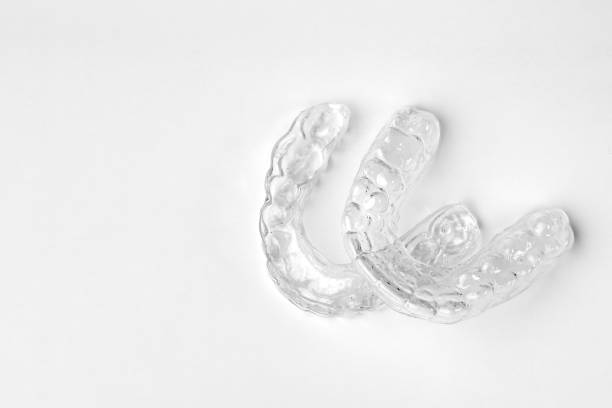
Can Invisalign Fix Crowded Teeth? How Orthodontists Create Space in Chevy Chase, MD
Maybe one of your lower front teeth has turned sideways. Maybe your top teeth overlap a little more each year. Invisalign for crowded teeth can correct many of these cases, but only after an orthodontist works out how much space is missing and why.
Crowding happens when teeth compete for room in the jaw. Clear aligners can move teeth, but they cannot make that room appear on their own. Every crowding plan starts with two questions. Where will the space come from? How will each tooth move into it?
Those questions matter even when the problem looks small. One slightly crooked tooth can sit inside a larger space problem that affects the whole arch. Crowding may involve the front teeth, the back teeth, or both the upper and lower arches.
At FitBite Orthodontics, every patient considering Invisalign in Chevy Chase, MD, starts with an individualized evaluation. Some crowding patterns suit clear aligners well. Others may call for a different approach. This guide explains how orthodontists measure crowding, create space, and decide which treatment fits.
Can Invisalign Straighten Crowded Teeth Without Traditional Braces?
Yes, Invisalign can treat many cases of dental crowding without brackets and wires. Suitability depends on crowding severity, its cause, the movements needed, root positions, and how your bite fits together.
Crowded teeth may need more than one type of movement. Depending on the case, a tooth may need to:
- Rotate, or turn in place
- Tip, so the crown leans into a new position
- Move bodily, shifting the crown and root together
- Adjust root position, so the root follows the crown into place
At FitBite, Invisalign treatment in Chevy Chase begins with a full diagnosis so your plan matches what your teeth actually need.
Clear aligners for crowded teeth are not automatically faster or more effective than braces. They are one tool, and the right choice depends on your case.
How Clear Aligners Move Overlapping Teeth Into Better Positions
Clear aligners for crowding work through staged tooth movement. Each aligner is shaped slightly differently from the one before it. That difference applies gentle pressure to selected teeth. The bone and tissues around each root respond by remodeling, which lets the tooth shift over time.
Overlapping teeth do not all move at once. Your orthodontist decides which teeth move first, how far each one travels, and in what order. That planned sequence helps keep teeth from colliding as they straighten.
If you want the full biology, our article on how Invisalign moves teeth explains what happens in the bone and ligament during treatment.
Can Invisalign Fix Crowded Bottom Front Teeth?
Invisalign can align many crowded lower front teeth, but the lower arch needs careful evaluation first. The lower incisors are small and narrow, and they sit in a tight curve. When space runs short, they can rotate, overlap, or get pushed forward or back.
The gum and bone covering the lower front teeth can also be thin. Before planning movement, an orthodontist looks at the whole lower arch, including:
- Where each tooth sits now
- How much bone and gum support surrounds the roots
- How the lower teeth meet the upper teeth
- How much space is truly available
Lower crowding can look like a simple cosmetic issue. In practice, it can connect to bite and support factors that shape the entire plan.
Can Invisalign Treat Severe Dental Crowding?
Invisalign can treat some severe crowding cases, but possible is not the same as predictable. A plan may look achievable on screen while certain movements remain hard to complete in real life.
Severe crowding may require substantial space creation, complex root movements, or extraction planning in selected cases. Some patients do better with traditional braces or a combined approach.
Severity alone does not decide the appliance. Root positions, bite relationships, gum support, and the type of movement all play a role. A thorough evaluation shows which option gives your teeth the most reliable path.
What Causes Crowded Teeth? Understanding Arch Space and Tooth Size
Dental crowding develops when your teeth need more space than your dental arch provides. The arch is the curved row of bone and gum that holds your teeth. When teeth need more room than the arch offers, they overlap, rotate, or shift out of line.
Orthodontists call this mismatch an arch-length discrepancy. Several factors shape it, including tooth size, arch shape, and changes over time.
What Is an Arch-Length Discrepancy?
An arch-length discrepancy occurs when the available dental arch space does not match the space your teeth need to align. Orthodontists compare two measurements.
- Available arch length is the space along the curve of your dental arch, known as the dental arch perimeter.
- Required tooth space is the combined side-to-side width of your teeth. Orthodontists call each tooth’s width its mesiodistal width.
When required tooth space exceeds available arch length, the result is a space deficiency. The size of that gap helps classify crowding as mild, moderate, or severe.
This tooth-size relationship is hard to judge in a mirror. Small rotations can hide significant crowding, and how teeth look does not reveal how much space they need. Accurate measurement requires an orthodontic exam and digital records.
How Tooth Size and Jaw Development Influence Crowding
Crowding reflects both the teeth and the bone that holds them. Larger teeth need more room, and a narrower or shorter arch offers less of it. Arch form, meaning the shape of the curve, also affects how teeth line up.
Eruption patterns matter too. Baby teeth lost early, or permanent teeth arriving out of sequence, can change how space gets used. Jaw development during childhood shapes the final size and shape of each arch.
Crowding can be purely dental, linked to broader skeletal relationships, or a mix of both. A narrow-looking smile does not automatically mean the jaw is too small. Sometimes the teeth are tipped inward instead. An orthodontist can tell the difference through examination and records.
Why Teeth Can Become More Crowded in Adulthood
Teeth can keep shifting long after the permanent teeth come in. Some adults notice their lower front teeth drifting in their 20s, 30s, or later.
Several factors contribute to teeth shifting with age:
- Gradual natural tooth movement over a lifetime
- Changes in the gums and bone that support the teeth
- Bite forces and wear that alter contacts between teeth
- Orthodontic relapse after earlier braces or aligners, especially without a retainer
Wisdom teeth get blamed for adult dental crowding, but the evidence is mixed. A 2023 systematic review of research on wisdom teeth and lower front crowding found no clear connection between lower wisdom teeth and incisor crowding after orthodontic treatment. Crowded teeth in adults can have more than one cause.
How Do Orthodontists Measure Crowding Before Invisalign Treatment?
Orthodontists measure crowding by comparing the space your teeth need with the space your arches provide. You see overlapping teeth. Your orthodontist measures how much room full alignment requires and where that room can come from.
The diagnostic process follows a clear sequence:
- Clinical examination of your teeth, gums, jaw, and bite
- Digital records, including scans and photographs
- Space analysis to measure the arch-length discrepancy
- Root and bite assessment to check tooth support and how the arches meet
- Treatment objectives that set goals for alignment, function, and stability
Each step shapes the next. Skipping ahead can produce a plan that straightens teeth on the surface but misses deeper problems.
Digital Scans Help Evaluate Tooth Positions and Available Space
Intraoral scans capture a detailed 3D model of your teeth. Orthodontists use these digital models to study tooth arrangement, arch dimensions, and how the upper and lower teeth relate.
The scan and the treatment simulation serve different purposes. The scan records where your teeth are today. The simulation shows a planned sequence of movements, which your orthodontist designs and adjusts. It represents a goal, not a guarantee.
Our article on digital Invisalign treatment planning walks through how that process works.
Why Orthodontists Evaluate Tooth Roots and Bone Support
A tooth that looks straight is not always positioned well. The visible crown is only part of the tooth. The root sits below the gumline, anchored in bone.
Moving a crown into an attractive spot without guiding the root can leave the tooth tilted underneath. Orthodontists evaluate root angulation, the surrounding bone, and the gum tissues before planning movement. Each tooth has anatomical limits on how far it can appropriately travel.
Your orthodontist may take X-rays when clinically appropriate. Not every Invisalign case requires a 3D CBCT scan. Imaging choices depend on what your case needs.
Why Bite Alignment Matters When Correcting Crowded Teeth
Crowding and bite problems can appear together, so orthodontists evaluate both. Before planning movement, your orthodontist checks:
- Overbite, or how far the upper front teeth overlap the lower ones vertically
- Overjet, or how far the upper front teeth sit ahead of the lower ones
- Crossbite, where upper teeth sit inside or behind the lower teeth
- Midlines, or whether the centers of the upper and lower teeth line up
- Arch coordination, or how well the upper and lower arches fit together
Straightening crowded front teeth without considering how they meet the opposing teeth can leave other problems unresolved. A coordinated plan addresses alignment and bite together.
How Does Invisalign Create Enough Room to Straighten Crowded Teeth?
Invisalign creates room through a planned space-management strategy, not through tray pressure alone. Aligners deliver the forces. Your orthodontist decides where the space should come from.
Several approaches can create or redistribute space. Your plan may use one or combine several.
| Approach | What It Does | When It May Be Considered |
|---|---|---|
| Tooth Repositioning | Redistributes existing space within the arch | Mild crowding or uneven spacing |
| Dental Arch Development | Moves teeth outward to change arch form | Selected cases with inward-tipped teeth and adequate support |
| Interproximal Reduction (IPR) | Removes a small amount of enamel between selected teeth | When tooth shape and enamel allow |
| Extractions | Removes selected teeth to create significant space | Severe crowding where conservative methods fall short |
Each option has limits. The sections below explain how they differ.
Planned Tooth Movement Can Redistribute Existing Space
Sometimes enough space already exists, just in the wrong places. Orthodontic space redistribution shifts teeth within the arch so the room moves to where crowded teeth need it.
This can involve controlled tipping, where a tooth’s crown leans into a new position. It can also involve translation, where the whole tooth moves together, crown and root. Small changes across several teeth can add up to meaningful space.
Good space management respects the bite and the bone around each root. Tooth alignment that ignores these limits may not hold.
Can Invisalign Widen a Narrow Dental Arch?
Invisalign can change arch form through tooth movement, but moving teeth outward does not automatically widen the jawbone. This distinction matters for planning.
Dental arch expansion moves teeth outward through controlled tipping or other movements. The teeth sit in a broader curve, but the underlying jaw has not necessarily grown wider. Skeletal expansion is different. It widens the upper jaw itself, and orthodontists typically use it in growing patients.
Growing children and teens with a narrow upper jaw may need a different approach, such as a palatal expander. Dr. Linda Hallman’s doctoral training in craniofacial growth and development informs how FitBite evaluates these cases. Knowing whether a narrow arch is dental or skeletal helps determine the right treatment.
When Is Interproximal Reduction Used for Invisalign Crowding?
Interproximal reduction, or IPR, is the planned removal of a small amount of enamel between selected teeth. That small change creates space for crowded teeth to align.
IPR is not required in every case. Your orthodontist chooses it based on tooth shape, enamel thickness, gum contours, and how much space you need. Enamel reduction for crowding may also help reshape teeth that are wider at the edges than near the gumline. That can reduce small dark gaps between teeth after alignment.
Some Invisalign plans pair IPR with other space-management methods, such as tooth repositioning. Other plans skip it entirely. To understand how the procedure works and what to expect, read our guide to interproximal reduction for Invisalign.
When Might Tooth Extractions Be Considered for Severe Crowding?
Some cases need more space than conservative methods can appropriately provide. In those situations, removing selected teeth may be one option.
Extraction decisions depend on several factors:
- How much space the crowding requires
- Tooth and root positions
- Facial proportions and lip support
- Bite relationships
- Gum and bone health
- Your overall treatment goals
Extraction is not automatic for severe crowding, and avoiding it is not always the better choice. A non-extraction plan that pushes teeth too far can create its own problems. The right answer depends on your anatomy and goals.
Why Creating Too Much Space or Moving Teeth Too Far Can Be a Problem
Teeth can only move within the limits of the bone and gums that support them. Orthodontists cannot expand arches or push teeth forward indefinitely.
Each root sits inside a ridge of alveolar bone, the bone that holds the teeth. Moving a root too close to the edge of that ridge can thin the bone and gum covering it. Teeth pushed beyond a stable position may also be more likely to shift back.
Careful planning weighs alignment against root position, alveolar bone, gum support, and bite stability. Invisalign does not prevent gum recession or other periodontal changes. Good diagnosis and monitoring help your orthodontist manage those risks.
How Invisalign Aligners Straighten Rotated and Overlapping Teeth
Once space is available, aligners guide each tooth into it through controlled movement. Space comes first, then movement, then final alignment. Without enough room, even well-designed aligners struggle to straighten crowded teeth.
Why Rotated Teeth Can Be Difficult to Straighten
Tooth rotation is one of the harder movements for clear aligners. In a 2020 clinical study of Invisalign tooth movement, rotation showed the lowest overall accuracy among the movements measured.
Several factors affect rotated teeth during Invisalign treatment:
- Tooth shape. Rounded teeth, like canines and some premolars, give the aligner less surface to grip.
- Contact relationships. Overlapping teeth may need space before they can turn.
- Movement size. Larger rotations need more control than small ones.
Turning a tooth in place requires paired forces working in opposite directions, called a force couple. Not every rotation is equally predictable, which is why planning and monitoring matter.
How Invisalign Attachments Help Control Crowded Teeth
Attachments are small, tooth-colored composite shapes bonded to selected teeth. They give the aligner a firmer grip and change how it pushes on each tooth.
For crowded teeth, attachments can help with rotations, root movements, and other movements that need extra control. Your orthodontist chooses their shape and position based on the movement each tooth needs. Our article on Invisalign attachments explains how they work in more detail.
Why Orthodontists May Move Certain Teeth Before Others
Orthodontists stage tooth movement so teeth have room before they move into it. A displaced tooth cannot fully align until space opens around it.
Staging also involves anchorage. Anchorage means using some teeth as a stable base while others move.
A simplified sequence might look like this:
- Create or redistribute space
- Move selected teeth into the new space
- Refine alignment
- Coordinate the bite
Your actual sequence depends on your crowding pattern and bite.
Invisalign for Crowded Teeth in Adults vs Teenagers
Adults and teens can both use Invisalign for crowded teeth, but their plans differ based on growth and dental development. Adults have generally finished skeletal growth. Some teens are still growing, and some may still have teeth erupting.
Compliance, gum health, and case complexity also shape planning in each group.
Correcting Crowded Teeth in Adults
Invisalign for adults works with fully erupted permanent teeth and a jaw that has stopped growing. That stability helps with planning, but adults bring their own considerations.
In adults, crowded teeth may sit near crowns, bridges, fillings, or implants. Implants cannot move, so the plan works around them. Gum health and bone support need evaluation before movement begins. Long-standing crowding may also have shaped the bite in ways that need correction.
None of these factors rule out treatment. They shape the plan. At FitBite, adult orthodontics in Chevy Chase starts with a conversation about your goals, prior dental work, and schedule.
Treating Crowding While Teenagers Are Still Developing
Teen crowding treatment depends on developmental stage. Some teenagers still have permanent teeth erupting or jaw growth underway. Both can affect when treatment should begin and what it should address.
Wear compliance matters too. Aligners only move teeth when worn for the hours your orthodontist prescribes.
Not every teen with crowding needs immediate treatment. Sometimes waiting for the remaining teeth to erupt leads to a better plan. An evaluation helps families decide on timing.
How Long Does Invisalign Take to Fix Crowded Teeth?
There is no universal timeline for Invisalign crowding treatment. Duration depends on several factors:
- Crowding severity
- The types of movement required
- Space-management decisions, such as IPR or extractions
- Bite correction needs
- How consistently you wear your aligners
- How your teeth and bone respond biologically
Your orthodontist can give a realistic estimate after reviewing your records.
Why Mild Crowding Is Not Always a Simple Invisalign Case
Mild crowding on the surface does not always mean a simple case. Visible irregularity does not reveal root positions or bite complexity.
Invisalign can fix one crooked tooth in some cases. Your plan may still need to address the wider arch or bite, though. That tooth may have shifted because of a bite problem, a narrow arch, or space loss elsewhere. Aligning it alone may not hold, and it may not address the cause.
How Aligner Wear and Tracking Affect Treatment Progress
Teeth follow the plan only when you wear your aligners as prescribed, and they fit snugly. Orthodontists call this Invisalign tracking.
Your orthodontist designs each aligner to fit your teeth in a specific position. When wear time slips, teeth fall behind the plan. The next aligner may not seat fully, and treatment progress slows.
Good aligner fit shows that teeth are keeping pace. If an aligner feels loose or leaves gaps over your teeth, let your orthodontist know.
Why Additional Aligners May Be Needed After Crowding Improves
Crowded teeth can look straight before treatment is truly finished. Root positions, contacts, and the bite may still need fine-tuning. Orthodontists call this final stage bite finishing.
Refinements are additional aligners designed from a new scan to complete those goals. They are a normal part of many treatment plans, not a sign that something failed. Our guide to Invisalign refinements explains when and why orthodontists use them.
Will Crowded Teeth Stay Straight After Invisalign?
Corrected crowding can stay stable, but teeth can still shift after active treatment ends. Retainers help protect your results long term.
Why Teeth Can Shift Back Toward Their Previous Positions
Orthodontic relapse happens when teeth drift after treatment. The fibers and bone around each tooth need time to adapt to new positions. Until they do, teeth can pull back toward where they started.
Natural tooth movement also continues throughout life. Teeth do not always return to their original positions, but some shifting is possible, especially without retention.
How Retainers Help Maintain Corrected Crowding
Retainers hold teeth in place while the supporting tissues adjust. They also help limit shifting in the years afterward.
Removable retainers are clear trays you wear on a set schedule. Fixed retainers are thin wires bonded behind the front teeth. Your orthodontist recommends the type and schedule that fits your case. Our comparison of clear vs. permanent retainers can help you understand the options.
Why Bite Finishing and Root Position Matter Before Treatment Ends
A good final result involves more than straight-looking teeth. Before treatment ends, your orthodontist evaluates alignment, root positions, tooth contacts, and overall bite relationships.
Careful finishing supports stability, but no single technique guarantees teeth will never move. Retention and follow-up remain part of long-term care.
Invisalign for Crowded Teeth at FitBite Orthodontics in Chevy Chase, MD
Maybe you have noticed overlap that keeps getting worse, or a tooth that has slowly turned out of line. Every crowding case at FitBite Orthodontics starts with a careful look at what your teeth need. Your evaluation identifies how much space is missing, why it is missing, and how your bite fits into the picture.
From there, Dr. Linda Hallman reviews your treatment options with you. Her PhD in craniofacial growth and development shapes how she evaluates arch space, jaw development, and tooth movement. That background helps her distinguish dental crowding from broader skeletal patterns.
If Invisalign suits your crowding pattern, your plan will reflect your specific space needs. If another approach would serve you better, you will hear that too. As an orthodontist in Chevy Chase, MD, Dr. Hallman offers Invisalign and other clear aligners in Chevy Chase in a warm private-practice setting. The Wisconsin Avenue office is also convenient for patients in nearby Bethesda and Friendship Heights.
FitBite Orthodontics provides personalized care for teens and adults seeking Invisalign in Chevy Chase, MD. To find out whether clear aligners can correct your particular crowding pattern, schedule an Invisalign consultation with Dr. Hallman and our team.
Frequently Asked Questions About Invisalign for Crowded Teeth
Can Invisalign fix severely crowded teeth?
Invisalign may work for some severely crowded teeth, depending on the case. Severe space deficiency, large rotations, or complex root movements can call for extractions, braces, or a combined approach. Suitability depends on your crowding pattern, bite, and gum support. A full orthodontic evaluation is the only reliable way to know which option fits.
Does Invisalign need to create space before straightening teeth?
Yes. Crowded teeth need room before they can align. Your orthodontist measures how much space is missing, then plans how to provide it. Space may come from shifting teeth within the arch, changing arch form, IPR, or extractions in selected cases. The right approach depends on your anatomy and goals.
Can Invisalign fix overlapping front teeth?
Invisalign can align many overlapping front teeth through planned clear aligner movements. Success depends on having enough space and enough control over each tooth. Attachments may help with rotations or root movements. Your orthodontist also reviews how the front teeth meet the opposing teeth so alignment and bite improve together.
Can Invisalign widen your jaw to make room for crowded teeth?
Invisalign can change arch form by moving teeth outward, but that does not automatically widen the jawbone. Orthodontists call this dental expansion, which differs from skeletal expansion. Growing patients with a narrow upper jaw may need a different appliance. Adults with a skeletal width problem may need other treatment options. An evaluation identifies which type of narrowing you have.
Do you need IPR for Invisalign crowding?
Not always. IPR is one way to create space, but it is not required in every case. Your orthodontist considers tooth shape, enamel thickness, and how much space you need. Some plans rely on tooth repositioning or arch changes instead. Others combine IPR with those methods to limit how far any single tooth has to move.
Is Invisalign better than braces for crowded teeth?
Neither is better for every case. Both Invisalign and braces can correct crowding. The right choice depends on your diagnosis, the movements your teeth need, your bite, and how complex your case is. Lifestyle preferences matter too. An orthodontist can explain which option offers the most predictable path for your teeth.
Can crowded teeth return after Invisalign?
Yes, some shifting is possible after treatment. The tissues around your teeth need time to adapt to new positions, and natural tooth movement continues throughout life. Shifting varies from person to person. Wearing your retainer as directed helps keep teeth where treatment placed them and protects the results you worked for.

